
MCP / AI integrations / Project management
MCP for project management: connect AI clients to real work
Connect an AI client to project management through MCP. Learn endpoint setup, access scopes, verification, practical ticket and QA workflows, and troubleshooting.
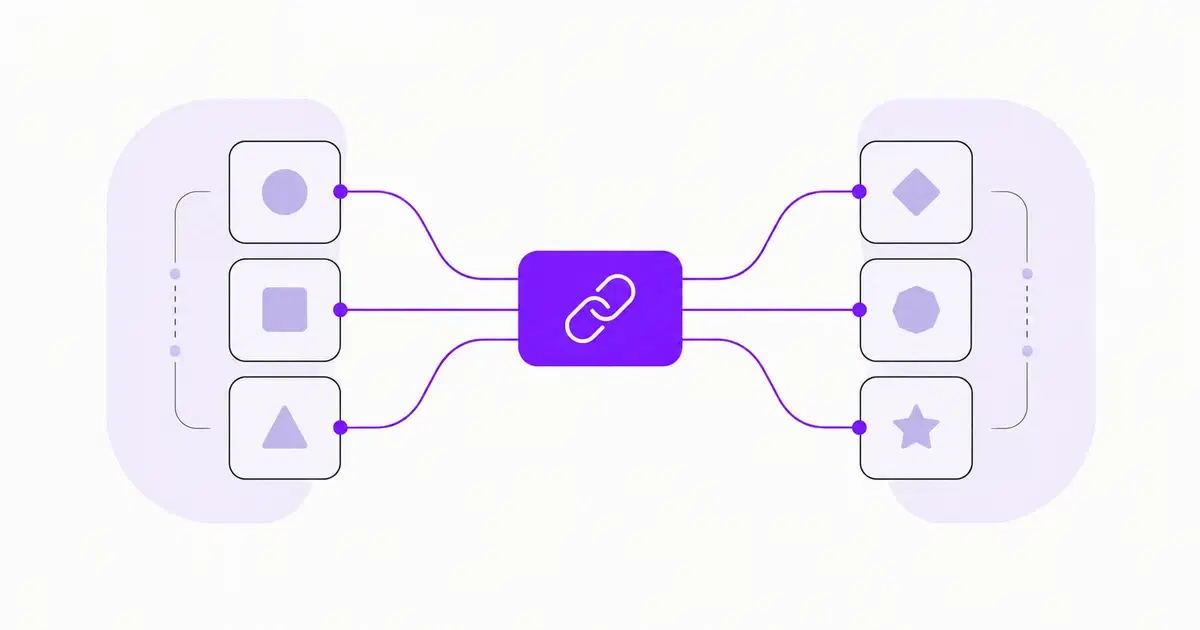
At a glance
MCP lets a compatible AI application discover and use supported project tools. Connect to the actual Leera endpoint, grant access for a focused task, test a familiar read, and verify one deliberate change before adopting a broader workflow. Client support, permissions, and provider handling remain separate parts of the setup.
An MCP server for project management gives a compatible AI client access to supported project information and actions. Instead of relying only on a pasted summary, the client can retrieve current records and, with the appropriate access, create or update work. The useful result is a connection that makes a specific task easier to complete and verify.
Leera includes an MCP server for supported workspace operations. This guide explains how to introduce it deliberately, from endpoint setup through a first read and a first change. The prompts below describe example assignments; available behavior depends on the client, server version, configuration, and granted access.
Understand the three parts of the connection
The official MCP architecture overview describes an AI application acting as a host, a client connection, and a server that provides capabilities. Tools expose executable operations. MCP standardizes this exchange; the application still determines how it presents the results and uses model context.
For a Leera workflow, think about three separate questions:
- Can the AI client reach and communicate with the Leera endpoint?
- What is the connection authorized to read or change?
- How will the person using it verify the result?
A successful connection answers the first question. It does not answer the other two. A client can also connect successfully while lacking the tools or permissions for a particular task. Check the available catalog instead of assuming that a familiar feature name guarantees an equivalent MCP action.
Choose MCP for work that benefits from current context
MCP is useful when the assistant is already helping with another task and needs related project information. A coding assistant might retrieve the issue it is implementing, inspect acceptance criteria, or create a follow-up issue after an authorized review. A general assistant might summarize a selected sprint from current records.
| Need | Suitable approach |
|---|---|
| Explore a project question inside Leera | Leera AI chat |
| Use project context from an external AI application | A compatible client connected through MCP |
| Repeat a configured project assignment on a schedule | A Leera AI Agent or another explicitly configured automation |
| Execute automated tests | Testing tools or CI, with result reporting connected separately |
| Perform a task without model interpretation | A direct application or API workflow may be simpler |
These are workflow choices rather than mutually exclusive product categories. A team can use Leera for planning, an external coding client for implementation, and CI for test execution. Keep the responsibilities and evidence clear as information moves between them.
Copy the actual endpoint from your deployment
Open the relevant Leera settings and use the endpoint shown for your instance. A self-hosted deployment commonly exposes /mcp through its public origin, but the actual hostname and connection details should come from the configured service.
Do not copy a sample hostname into production and expect it to discover your workspace. Likewise, a JSON configuration for one client is not a universal setup format. Clients differ in their support for remote transports, authentication flows, protocol versions, and configuration screens.
If you run a reverse proxy, confirm that /mcp reaches the backend. Leera’s standard self-hosted routing separates this from the web application, and /mcp is not nested under /api. Test the externally reachable address that the client will use, including TLS and any network access restrictions.
Record the client name and version, endpoint, authentication method, and intended workspace in a short setup note. This makes later connection problems easier to diagnose without exposing a token in the note itself.
Grant access for the actual assignment
Use the supported OAuth flow or create a scoped token as appropriate for the client. Review the access requested during consent. For a manually created token, select the relevant scopes and project restrictions and choose an appropriate expiry.
A sprint-summary connection generally needs less access than a connection expected to create issues and record QA results. Begin with the narrow task. Expand access when a real requirement establishes why it is needed, rather than enabling the whole catalog in anticipation of future work.
Leera token settings support scopes, project restrictions, expiry, and revocation. A newly created plaintext token is shown when created; store it securely in the client’s supported credential mechanism. Give credentials meaningful names so a future administrator can distinguish a trial connection from an actively used integration.
The MCP security guidance covers issues including scope minimization, token handling, and malicious content entering tool workflows. Treat an access boundary as part of the integration itself. A natural-language instruction requesting restraint complements server permissions; it does not replace them.
Verify a familiar read before asking for analysis
Start with a record you already understand. Ask the client to identify the accessible workspace and retrieve a known issue using its exact key. Compare the response with the application.
Check the issue title, project, status, and relevant description. If the client returns an empty list, determine whether the record is outside the project restriction, unavailable to the connection, or absent from the requested filter. An empty result is not automatically evidence that the project has no work.
Then try a bounded question:
Read issue WEB-42 in the connected workspace. Summarize its acceptance criteria and list unresolved questions from the available discussion. Include the issue key. Make no changes.
WEB-42 is an illustrative key; substitute a real record from a suitable project. Ask the client to identify missing information instead of filling gaps with assumptions. Review the response for completeness and whether it distinguishes recorded requirements from its own interpretation.
Do this verification again when changing the workspace, credential, or client configuration. A previous successful connection does not prove that a new one has the same scope.
Test one deliberate write and read it back
Once reads behave as expected, choose a harmless, clearly labeled test record in an appropriate project. Specify the exact intended change and the fields that should be set. If the client offers an action review step, inspect the target and arguments before it proceeds.
For example:
Create one task in the INTEGRATION project titled “MCP connection verification.” Describe it as an internal setup check. Leave it unassigned. Return the created issue key and read the saved record back.
That assignment authorizes one specific creation. It does not require the assistant to reorganize the backlog, infer an owner, or create a sprint. Check the saved record in Leera and confirm that the client’s final text matches what was actually stored.
Test failures deliberately within the approved setup, such as attempting a read outside a trial credential’s project restriction. The expected result should be a controlled refusal or inaccessible record, not broader access. Keep the test small and revoke the trial credential when the connection is no longer needed.
Bring issue context into a coding workflow
A useful implementation workflow starts by reading the issue and its acceptance criteria. Ask the coding client to explain its intended approach and identify missing product decisions. Keep code changes and project changes within the requested scope.
After implementation, distinguish what was edited from what was verified. A client can report which checks it ran and which results it observed. It should not mark a test as passed merely because it wrote a plausible test file or encountered no visible error while editing.
When the team wants a project update, specify the destination and content. A concise update can state the change, checks performed, known limitations, and relevant code reference. The client should return the saved issue or comment reference so a person can inspect it.
Avoid having multiple clients independently manage the same record without a clear owner. They may each read a slightly different state and produce conflicting updates. For collaborative work, read current state immediately before a meaningful change and confirm the result afterward.
Connect QA results without inventing execution evidence
Leera’s supported MCP QA tools can help manage cases, plans, runs, and results. The test itself still executes in the tester’s environment or automation system. Preserve that distinction in the reporting workflow.
Map each reported result to the intended case and run. Include the environment and build context, the observed outcome, and evidence or notes needed for review. If a CI job stops halfway through a suite, do not map all remaining cases to passed merely because the reporting step ran.
Plan for retries. A network interruption after a successful write may leave the client unsure whether the result was saved. Before repeating a creation, inspect the destination where practical and use the integration’s supported identifiers. A repeated request can otherwise create duplicate records.
Use the QA test management guide to define result meanings before connecting automation. A technically valid API or MCP call still produces poor evidence if blocked, skipped, and failed states are mapped inconsistently.
Review retrieved content as data
Issue descriptions, comments, and documents can contain text from many people and systems. Some of that text may look like instructions to an assistant. A record describing a task is context for the user’s request; it should not silently expand the request or authorize unrelated actions.
Keep sensitive actions explicit. A read-only sprint review should not become a permission change because a comment asks for it. If an integration is allowed to write, define the target project and intended operation, and review the resulting record.
Also consider the client’s data handling. A self-hosted Leera endpoint can still send retrieved project context into an external AI application or provider. Review the application account, model configuration, and organization policy that apply to the connection. Hosting the source system locally does not describe the entire path the information takes.
Troubleshoot the specific layer that failed
Use the observed symptom to narrow the investigation instead of replacing credentials repeatedly.
| Symptom | First things to inspect |
|---|---|
| Endpoint cannot be reached | Hostname, TLS, network access, and reverse-proxy route |
| Web page or 404 returned from /mcp | Whether the route reaches the API rather than the web app |
| Authentication refused | Token expiry or revocation, authentication method, and correct instance |
| Connection works but a tool is missing | Client compatibility, exposed catalog, scopes, and module access |
| Record is absent | Project restriction, record identity, access, and query filters |
| Report claims success but no record exists | Tool result, destination workspace, and a direct read-back |
Capture a sanitized error, client version, and operation name for troubleshooting. Do not paste bearer tokens or private project contents into a public issue. Reproduce with a small test record when possible.
Once the workflow is stable, document its owner, credential purpose, review expectations, and removal procedure. Revisit access when people or responsibilities change. The connection should remain understandable after the person who first configured it moves to another project.
Frequently asked questions
What is an MCP server for project management?
It exposes supported project operations through the Model Context Protocol so a compatible AI client can discover and call them. Depending on the server and granted access, a client can read project information or perform actions such as creating issues and recording test results.
Do all MCP clients use the same configuration?
No. Transport, authentication, protocol support, and configuration interfaces differ between clients and versions. Use your client’s current instructions and the endpoint shown by your Leera deployment.
Should I use OAuth or a manually created token?
Use the authentication method supported by the client and deployment. Leera supports appropriate OAuth connections and scoped tokens. Review requested access during consent or token creation, set an appropriate expiry where available, and revoke credentials when they are no longer needed.
Does an MCP connection allow every action in the UI?
No. A client can only use the server tools exposed for the connection and the access granted to its credential. UI features, API operations, and MCP tools are related but are not interchangeable catalogs.
Why can the website work while the MCP endpoint fails?
A reverse proxy may route web traffic correctly while failing to forward /mcp to the backend. Authentication, client compatibility, scopes, project restrictions, and expired credentials are other common things to inspect.