
Give great engineering
a clear path to ship.
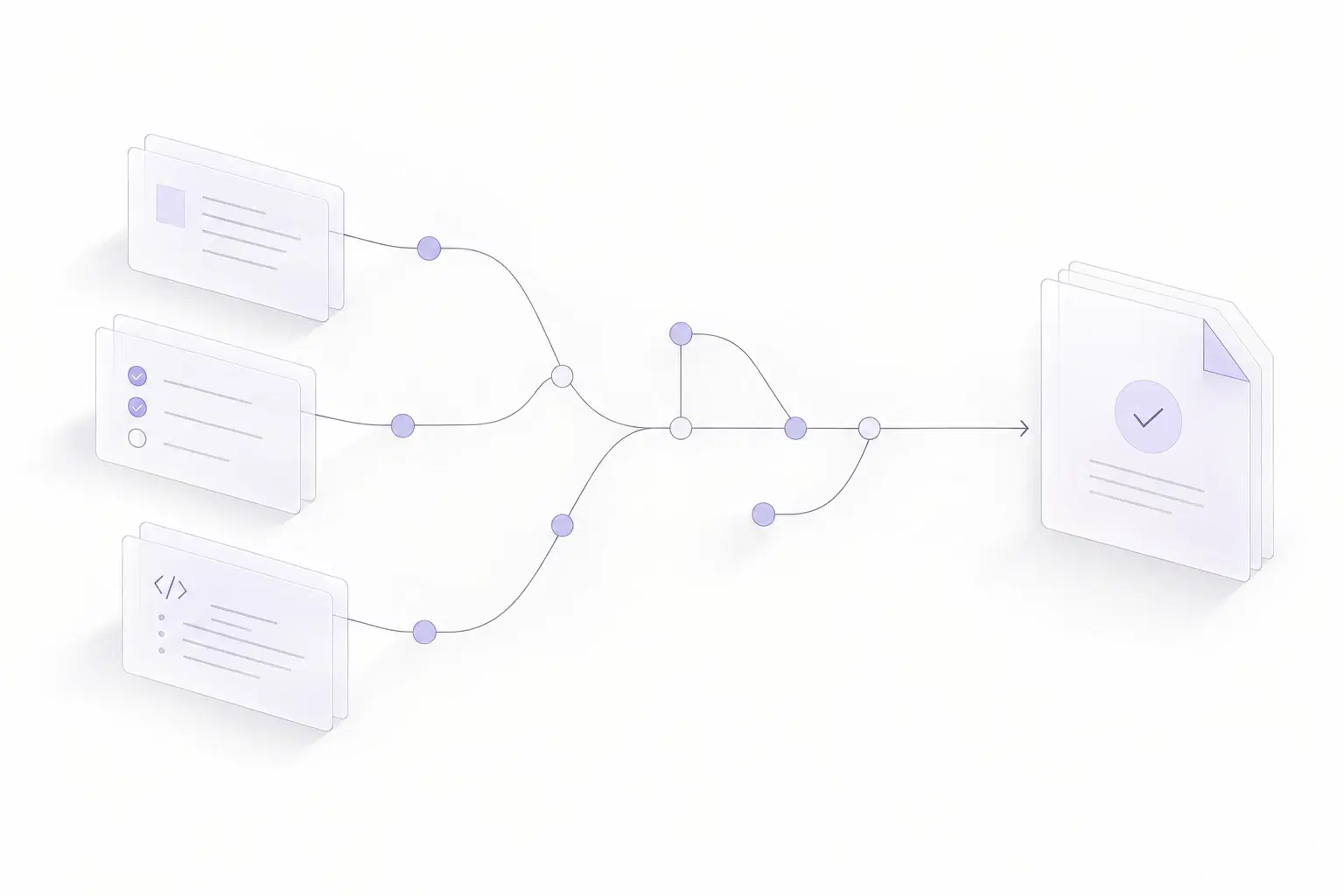
Keep the specification, sprint, implementation, and test evidence in the same conversation. Leera gives engineers the context to build, leads a view of what needs attention, and the whole team a clearer way to move a change toward release.
A smaller, safer checkout
Start with the context
Bring technical decisions, acceptance criteria, and implementation work together before the first line of code.
See the next blocker
Follow ownership, issue relationships, and sprint progress without piecing the picture together from separate updates.
Finish with evidence
Keep test coverage and defects close to the changes they verify, so release reviews have something concrete to discuss.
Make the scope clear.
Keep the reasoning close.
A useful sprint starts with work people understand. Connect the RFC to a focused backlog, break larger changes into manageable pieces, and agree on what completion means before implementation begins.
Explore PlannerDecisions that stay findable
Write the approach, constraints, and alternatives in Documents. Keep diagrams, code blocks, and saved versions with the specification as the design evolves.
Issues ready to pick up
Give each change an owner, priority, estimate, and acceptance criteria. Connect related issues so prerequisite work and follow-up tasks are easy to trace.
A sprint the team can discuss
Choose scope from the backlog and review issue counts and story points. Use the roadmap to see how epics and their child issues fit together.
Follow the change.
Unblock the people.
The board is a starting point for a useful conversation. Look at work by status or owner, open the issue for the details, and keep technical discussion where the next person will find it.
Explore CoordinationCode and context, connected
Keep review links and implementation notes in issue descriptions and comments. GitHub repository connections and pull request synchronization are in development.
A shared view of the load
Group the board by assignee or priority and review project workload. Spot work that needs an owner or a conversation before the sprint review.
Updates without another meeting
Gather progress and blockers through Coordination. Teammates answer in their own threads, and the combined report gives leads a focused place to follow up.
A finished issue.
A verifiable change.
Bring quality into the same delivery loop. Connect the behavior you intended to build with the tests, results, and remaining defects that help the team assess readiness.
Explore QA & TestingCoverage alongside the requirement
Link test cases to implementation issues. Select the relevant cases for a release plan, including changed behavior and regression checks that matter to the product.
Failures with a reproduction path
Keep steps, environment, notes, and evidence in the run. Create a linked defect from a failed check and bring the fix back for verification.
A useful release conversation
Review test results and outstanding work together. Capture the release decision and update the runbook so the next engineer inherits the context, too.
Less reconstructing.
More forward motion.
Ask about your project, turn a large issue into suggested subtasks, or summarize a technical discussion before replying. Give recurring sprint checks an objective and schedule with AI Agents.
Explore AI for your workAvailable with a configured AI provider.
Break the API retry issue into implementation and verification tasks.
A starting point for the change
Separate retry policy, backoff handling, and error reporting. Add checks for exhausted retries and repeated requests, then review the proposed scope with the issue owner.
- Review subtasks
- Refine acceptance criteria
- Draft test cases
The details your
team depends on.
Around every milestone, there is everyday work. Give it a place, too.
Board, list, and backlog
Move between the daily flow and upcoming work while keeping the same issue details.
Technical knowledge
Organize RFCs, architecture decisions, and runbooks into collections with saved version history.
GitHub connections · In development
Preview the planned repository workflow. Keep code review links on issues while native connections are in development.
Project context for agents
Connect compatible coding clients through MCP with the project access and scopes you grant.
Sprint review reports
Prepare a focused account of completed work, open blockers, and questions for the next cycle.
Infrastructure choice
Explore self-hosting when your team needs to operate Leera on its own infrastructure.
For engineering teams
Good questions. Clear answers.
Can we use continuous delivery instead of sprints?+
Yes. Work from the kanban board or issue list and use the backlog to organize what comes next. Sprints are available when a time-boxed planning rhythm helps. The roadmap still gives you an epic-and-child view of dates across the work.
How does Leera fit with GitHub and coding agents?+
GitHub repository connection and synchronization are in development in the web app. Compatible coding clients can use Leera MCP today with granted scopes and project access. Keep pull request links in issue descriptions or comments, and confirm deployment through your release system.
Can engineers and QA work on the same change?+
Yes. Test cases link to Planner issues, and failed checks can create linked defects. Engineers can follow the reproduction context while testers keep run results and follow-up verification with the relevant work.
Can we run Leera on our own infrastructure?+
Leera offers a self-hosted deployment option. Review its setup and plan requirements for your environment. AI features use the provider configuration available to your deployment, including supported options for bringing your own model.

Give the next release
a clearer path.
Bring the plan, the people, and the proof into one workspace built around the way your engineering team works.