
Know what works.
Show what’s ready.
Give every release a quality story the team can follow. Build reusable coverage, coordinate the testing, and carry evidence from a failed check to a verified fix. Leera keeps QA connected to the product and engineering work it supports.
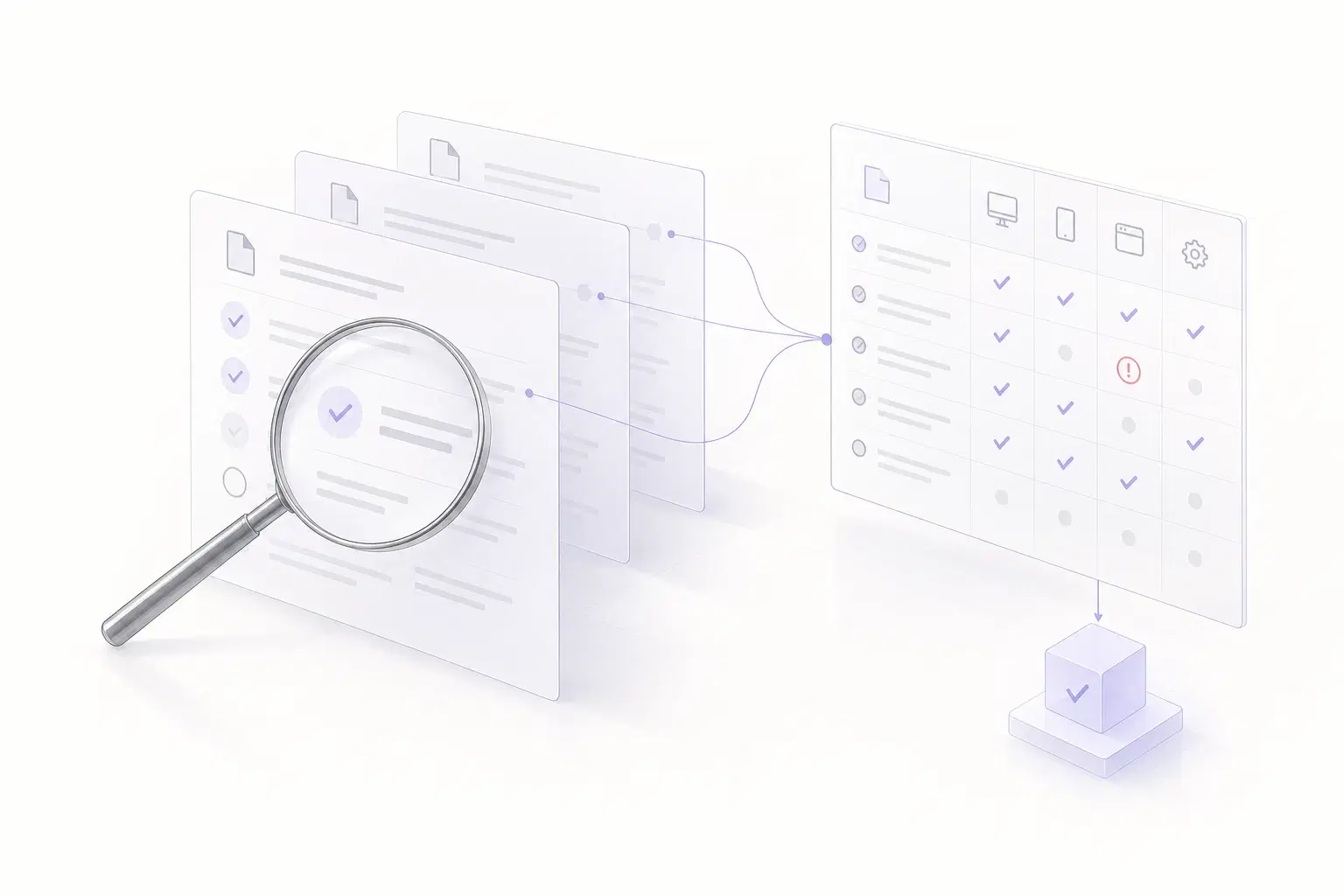
The right checks for this release
Coverage you can build on
Maintain one useful case library, then choose the scope that matters for each sprint and regression pass.
Runs people can repeat
Keep the environment, setup, expected behavior, and execution details close to every result.
Risk the team can see
Bring failures, blocked checks, and remaining coverage into the release discussion with the supporting evidence.
Good coverage starts
with the behavior.
Turn requirements into clear, repeatable checks. Organize your library around the product, keep cases connected to the issues they cover, and make repeated setup easier to maintain as the application changes.
Explore the test libraryCases with a clear purpose
Describe preconditions, actions, and expected results. Use modules to separate areas such as authentication, checkout, and permissions without losing the connection to the requirement.
Reusable steps, less upkeep
Maintain common sequences such as signing in as shared steps. Keep each case focused on the behavior being tested, and consult history when coverage changes.
Scope shaped by the release
Select cases for a plan using the work being delivered. Issue relationships support sprint and epic filtering, helping you find relevant coverage in a growing library.
Every tester aligned.
Every result in context.
Give the run a defined scope and environment, then make ownership explicit. Testers can work through the checks with the setup they need while the team follows what has passed, failed, or needs attention.
Explore test runsThe right setup at hand
Select the environment and keep test account details in their dedicated view. Assign testers so work is distributed and a blocked check has someone to follow up.
Results with the detail intact
Record step verdicts, notes, and evidence during execution. Capture screenshots or logs when behavior differs from the expectation, while the reproduction details are still fresh.
A realistic view of the effort
Use case estimates to understand the planned testing load. The execution timer records active testing time and pauses, making measured effort available in reports and history.
Make the failure useful.
Make the risk visible.
Quality work continues after a verdict. Connect defects to the people fixing them, record the follow-up check, and give release owners a precise account of verified behavior and unresolved coverage.
See the connected PlannerA direct route into engineering
Use Fail + defect to create a linked Planner issue from a failed check. Carry the reproduction context into the development queue and follow the fix.
A record you can revisit
Runs preserve the case definition captured at the start. Later library edits leave earlier execution records intact, so the team can understand what was actually tested.
A release review with substance
Read the run report with engineering and product. Review passed, failed, blocked, and skipped results separately, then agree on the unresolved risks and next steps.
Start with the requirement.
Explore the ways to test it.
Generate suggested cases from a Planner issue, then review the procedures and expected results. Keep the useful coverage, add your domain knowledge, and save selected cases to the project library.
Explore AI for your workAvailable with a configured AI provider.
Draft test cases for password reset, including expired and reused links.
Suggested coverage to review
Check a valid reset, an expired link, a link used twice, and a request for an unknown account. Confirm the expected message and account state for each scenario.
- Review expected results
- Select useful cases
- Save to the library
The details your
team depends on.
Around every milestone, there is everyday work. Give it a place, too.
Modules and case history
Give the library a product structure and revisit how a procedure or expected result changed.
Plans you can reuse
Maintain a selection of cases for smoke checks, regression passes, or a particular release.
Environment context
Keep environment names, base URLs, and descriptions ready for the next execution.
Test account details
Find account roles, sign-in information, and notes in the dedicated credentials view.
Issue-linked defects
Connect a failed verification to the development work needed to address it.
Execution reports
Review outcomes and measured testing time when you prepare the quality update.
For QA teams
Good questions. Clear answers.
Can we reuse cases across sprints and releases?+
Yes. The project library holds reusable cases, and plans select the coverage needed for a particular purpose. Create multiple runs from a plan. Each run captures its own case definitions, so later library edits do not rewrite earlier results.
How do failed tests get back to developers?+
Fail + defect creates a linked Planner issue from a failed check. Keep the steps, environment, notes, and evidence with the run so engineering can investigate the behavior and QA can follow the fix through verification.
Does Leera run our automated test suite?+
Leera manages cases, plans, runs, and results. Your test runner or CI environment executes automated suites. APIs and MCP provide integration paths; check the supported result tools and access for the workflow you want to connect.
How are unfinished checks represented?+
Pending checks stay visible while a run is active. Completing the run marks remaining pending cases as skipped. Reports distinguish passed, failed, blocked, and skipped results so the release discussion can account for coverage that was not completed.

Bring the evidence.
Share the confidence.
Give your QA team one connected home for the coverage, the execution, and the work that makes the next release better.