
Keep the product vision
close to the work.
Take an idea from a useful brief to a delivery plan the team understands. Leera connects product decisions, priorities, progress, and release evidence, so you can keep the wider direction in view without losing the details that shape it.
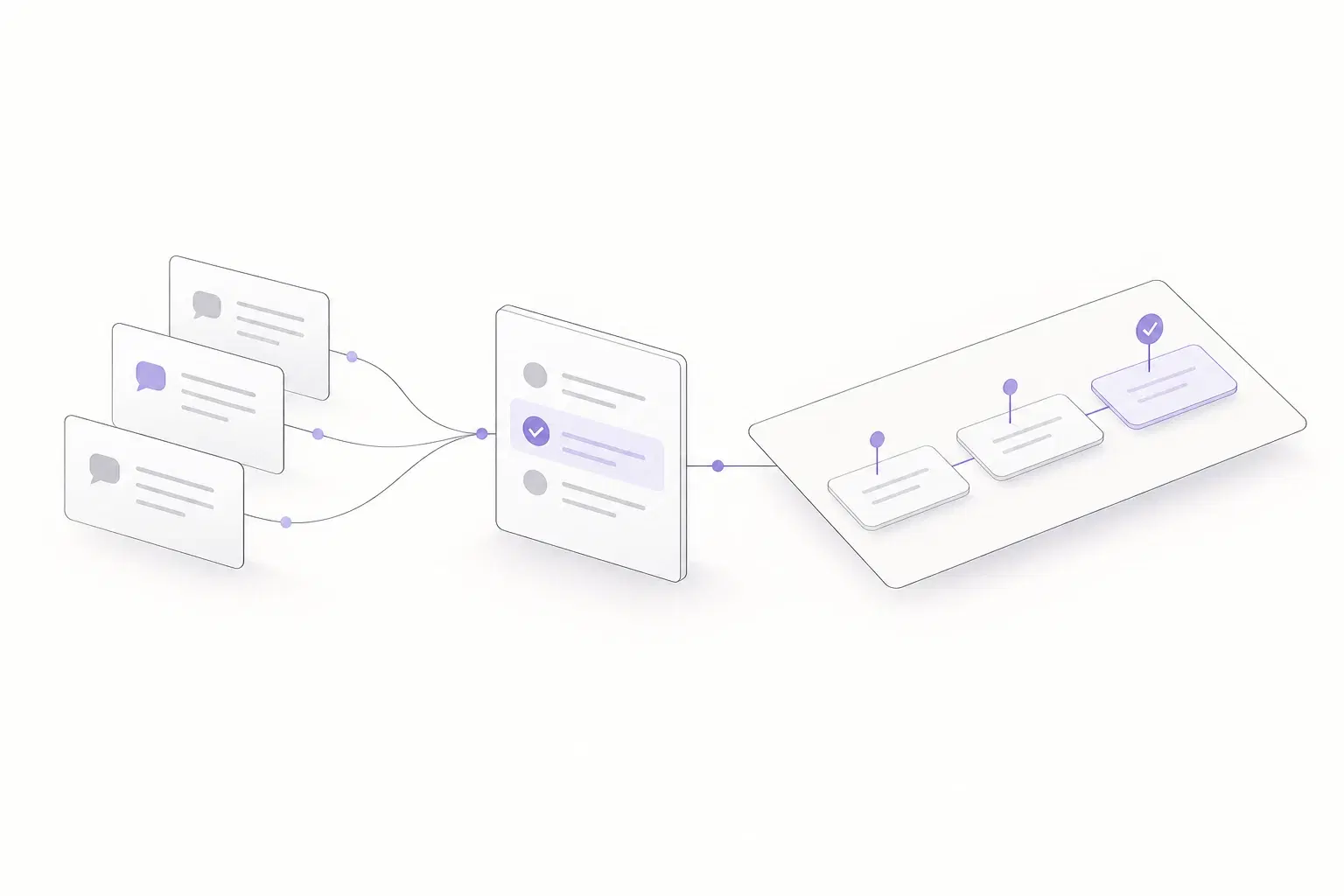
The reason behind the roadmap
A shared understanding
Make the problem, intended outcome, and boundaries clear before a promising idea becomes a full backlog.
Priorities people can follow
Connect the roadmap to real issues, owners, and dates, keeping tradeoffs visible when the plan changes.
Updates with an answer
Bring progress and team context together so stakeholders can focus on the decision that needs their attention.
Make the why clear.
Give the idea some shape.
Capture the customer problem, the desired behavior, and the constraints in a brief the team can return to. Keep open questions visible while you work toward a scope everyone can understand.
Explore DocumentsA brief people can use
Write PRDs with headings, tables, images, and checklists. Separate the desired outcome from implementation details, and record what is intentionally outside the first version.
From a sentence to an action
Turn selected document text into a linked Planner task. Give the resulting issue an owner and acceptance criteria while the reasoning behind it is still close.
Decisions with a history
Organize briefs and research notes into collections. Save document versions at useful checkpoints so the team can revisit the assumptions behind a changed requirement.
See the bigger picture.
Open the actual work.
Keep product direction connected to the team’s daily plan. Move between the roadmap, backlog, and board to understand what is planned, what is underway, and which assumptions need another conversation.
Explore PlannerA roadmap grounded in issues
See epics and child issues against dates. Move or resize the timeline when the plan changes, then open the issue to review its owner and context.
A backlog with clear choices
Review priorities, estimates, and related work with engineering. Choose the next sprint’s scope together and leave future ideas in the backlog.
Different questions, familiar views
Group the board by status, assignee, type, or priority. Combine filters to focus a triage discussion or check the progress of a particular area.
Bring the update.
Leave room for the decision.
A stakeholder update needs both the state of the work and the context behind it. Bring those perspectives together, then make the open questions and next decisions easy to understand.
Explore Reports & ChartsHear from the people closest to it
Use Coordination to ask design, engineering, and QA about readiness and blockers. Their individual responses come together in a shared report you can follow up on.
An update for its audience
Generate a report from a template or focused brief. Refine the narrative and export it as Markdown, HTML, or Word for the review you are preparing.
Compare delivery with the intent
Review completed issues and linked test coverage against the original acceptance criteria. Capture remaining questions and follow-up work so the next cycle starts with what you learned.
Move the thinking forward.
Keep the judgment yours.
Sharpen a rough brief, suggest smaller pieces of work, or prepare a project report around a specific question. Review the suggestions with the team and carry the useful parts into the plan.
Explore AI for your workAvailable with a configured AI provider.
Turn this onboarding requirement into a first delivery slice and follow-up work.
A smaller scope to discuss
Start with account creation and the first successful setup. Separate optional profile details and advanced preferences into follow-ups, then confirm the acceptance criteria for that first experience.
- Refine the brief
- Review suggested scope
- Create selected tasks
The details your
team depends on.
Around every milestone, there is everyday work. Give it a place, too.
Product briefs and PRDs
Keep the problem, expected behavior, and acceptance criteria in a shared project document.
Epic and issue timelines
Review the dates behind a roadmap and open the work responsible for each part.
Backlog refinement
Give the next planning discussion concrete priorities, estimates, owners, and issue relationships.
Team perspectives
Gather async input from the disciplines that shape the next product decision.
Questions into charts
Ask about a project metric and period in AI chat, then explore a follow-up.
Acceptance coverage
Connect the planned behavior to test cases and results before you discuss release readiness.
For product managers
Good questions. Clear answers.
How do product documents connect to delivery?+
Select text in Documents and choose Task to create a Planner issue with a link in the document. Add ownership, acceptance criteria, and relationships to develop the delivery plan. The brief and its saved versions remain available as the scope evolves.
What does the roadmap show?+
The roadmap shows epics and child issues on a date-based timeline. You can move or resize their dates and open the underlying issue for context. It helps the team discuss the planned sequence alongside the backlog and sprint scope.
Can I prepare updates for different stakeholders?+
Yes. Reports support templates and custom briefs, so you can define the audience, scope, and period. Edit the resulting report and export it. Coordination adds progress and blocker context from the teammates closest to the work.
Can product and QA agree on acceptance in Leera?+
Yes. Put acceptance criteria on the issue and connect the cases that verify them. Review run results and linked defects with QA and engineering to understand what has been checked and what still needs a release decision.

Bring the product direction
into the everyday work.
Give your next idea a thoughtful brief, a connected plan, and a team that understands where it is going.